“A redesign that fixes the wrong problem costs twice - once to build and once to explain why conversions still didn't move.”
The redesign trap, in one lineThe Question Everyone Asks Too Late
Most founders ask whether to redesign their website after something has already gone wrong - a competitor launched something sharper, a sales prospect asked why the site looks dated, or Google traffic quietly dropped 30%. By that point the conversation is reactive, and reactive redesigns tend to overscope and underdeliver.
The smarter question is: what problem are you actually trying to solve? A redesign is a tool, not a cure-all. Sometimes the issue is conversion rate and the fix is copy. Sometimes it is technical debt and the fix is a rebuild under the hood. Sometimes a full visual redesign is genuinely the right call. Knowing which is which saves you 3 to 6 months of work.
Clear Signs You Should Redesign
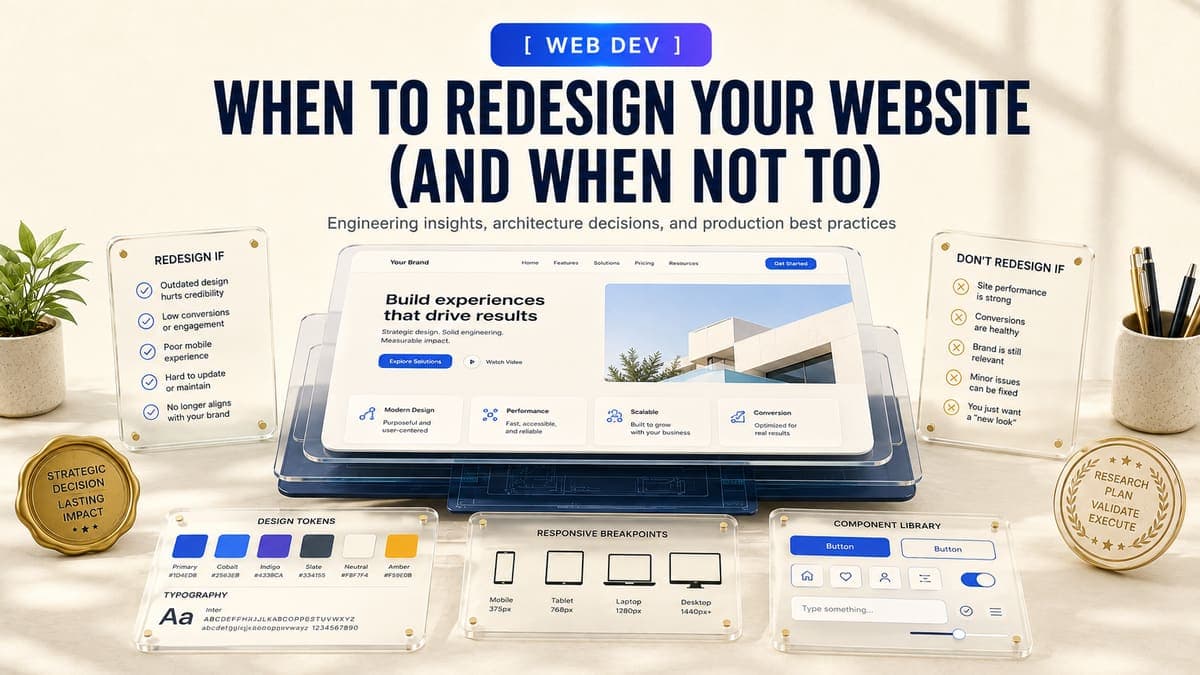
There are situations where continuing to patch an existing site costs more than starting fresh. If your current site was built on a platform or template that no longer fits your business, every new feature becomes a workaround. You end up paying developers to fight the structure rather than build.
Conversion rate is the clearest signal. If your site gets qualified traffic but under 1% of visitors take the action you need - booking a call, starting a trial, requesting a quote - the site is leaving revenue on the table. That is a design and copy problem, not a traffic problem. A redesign focused on conversion can realistically move that number to 3% to 5% for a well-targeted B2B or SaaS site.
- Page load speed above 3 seconds on mobile (a Google ranking factor since 2018)
- Your messaging has changed but the site still describes a product you no longer sell
- No clear primary call to action on the homepage - visitors have to hunt
- The site was last updated more than 3 years ago and looks visibly dated against competitors
- Your current platform cannot support the integrations your sales team needs
- Accessibility failures that create legal exposure under WCAG 2.1 guidelines
When a Redesign Is the Wrong Answer
If your conversion problem is that the wrong audience is landing on your site, a redesign will not fix it. That is an SEO and targeting problem. Redesigning a site with broken traffic acquisition is like repainting a car with a flat tyre. It looks better but it still goes nowhere.
Similarly, if your bounce rate is high but your page speed is fine and your messaging is clear, the problem is often the offer itself - not the design. Redesigns fail when teams treat them as a way to avoid harder conversations about pricing, positioning, or product-market fit. No layout change fixes a value proposition that does not land.
The Hidden Cost of Redesigning Too Often
Redesigning every 18 months is a pattern we see at companies where leadership changes frequently or where there is no design system in place. Each cycle resets brand recognition, cannibalises SEO authority built by existing URLs, and costs real money - a professional redesign for a mid-size B2B site typically runs $15,000 to $60,000 depending on scope.
The compounding SEO cost is the one most teams miss. Every time you change URL structures, consolidate pages, or switch platforms, you risk losing the domain authority and backlink profile you have spent years building. Google treats a redesigned site as a changed site. If redirects are not handled perfectly, rankings drop - sometimes by 40% to 60% in the first 90 days after launch.
Redesign Now
- Platform is actively limiting new features or integrations
- Site was built more than 3 years ago with no design system
- Rebranding or major positioning shift has already happened
- Mobile experience is broken and cannot be fixed incrementally
What a Focused Redesign Actually Includes
A well-scoped redesign is not 'make it look modern.' It starts with a conversion audit of your existing site - what pages get traffic, where visitors drop off, which CTAs are being clicked and which are invisible. That data shapes every design decision that follows.
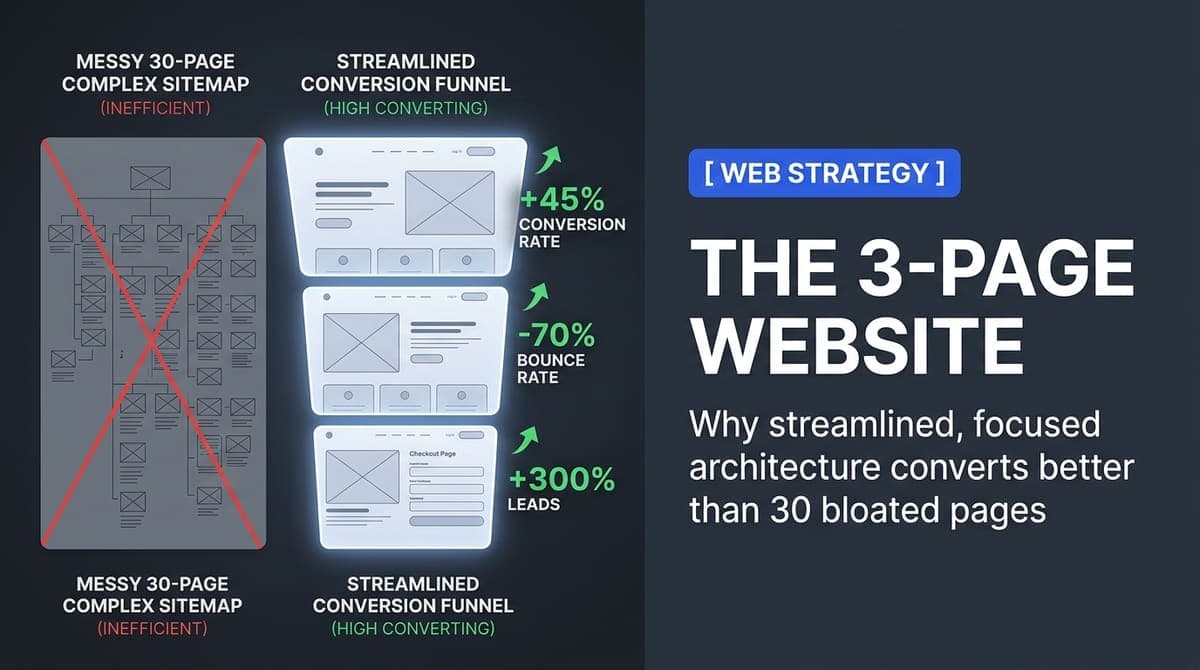
The pages that move the needle for most businesses are the homepage, the main service or product page, and the contact or booking page. If those three convert well, everything else is secondary. Teams that spread a redesign budget across 40 pages rarely get better results than teams that focus the same budget on five pages done properly.
Platform Choice Matters More Than Aesthetics
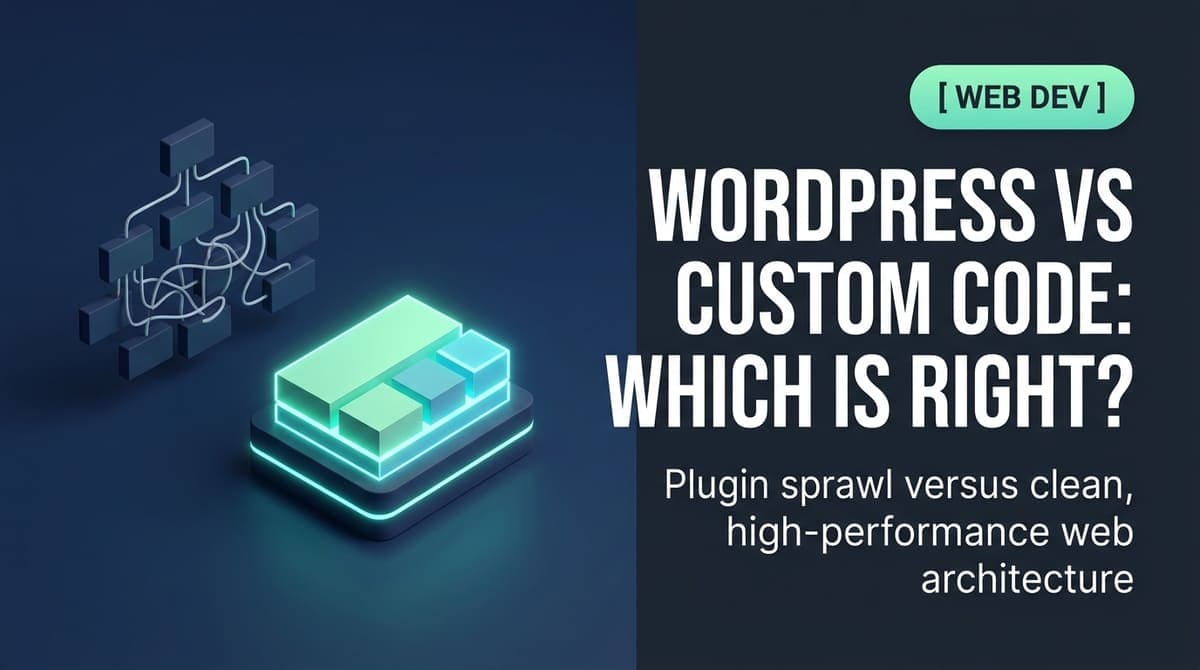
Choosing the right platform during a redesign determines how much your site will cost to maintain and extend over the next 3 to 5 years. A marketing site that needs fast content updates belongs on a headless CMS. A site that is functionally an application - with auth, user data, and dynamic content - should be built as one, not crammed into WordPress with 12 plugins.
The platform decision is also where a lot of DIY redesigns go wrong. A site built on a drag-and-drop tool can look fine at launch but become a performance and integration liability six months later when you need to connect it to your CRM, run A/B tests, or push page speed scores high enough to compete for top-5 rankings.
The Decision Framework
Before committing to a redesign, run these checks: Is traffic the problem or conversion? Is the platform the constraint or just the aesthetic? Has your business changed enough that the current messaging is genuinely wrong? If the honest answer to all three is yes, a redesign is justified. If only one is yes, there is probably a cheaper fix.
This is exactly the kind of scoping work we do before any redesign engagement - because the worst outcome for both sides is building something expensive that does not move the metrics that matter. If you are weighing a redesign and want a second opinion on whether it is the right call, that is a conversation worth having before you commit budget.