“Google AI Overviews don't link to the most popular site. They quote the clearest answer. If your content can't be lifted and read as a standalone sentence, you won't be cited.”
Generative Engine Optimization, in one principleWhat Changed When AI Entered Search
For fifteen years, SEO was a game of ranking on page one. The prize was a click. Generative Engine Optimization - GEO - changes the game completely. Google AI Overviews, ChatGPT search, and Perplexity don't send you ten blue links. They synthesise an answer from multiple sources and cite the ones they trusted. If you're not one of those sources, you don't exist to that user.
The shift is faster than most teams realise. AI Overviews and AI-generated answers now appear on a large and growing share of informational queries, especially ones that start with "what is," "how do," or "best way to." The exact percentage shifts by the month, so check Google Search Console’s own AI-features reporting for your current numbers rather than relying on a fixed figure. Traffic to sites that haven't adapted has dropped noticeably in those categories.
The good news is that the signals Google and OpenAI look for are readable. You don't need to reverse-engineer a black box. You need to produce content that a language model can parse, extract, and confidently attribute.
How AI Overviews Actually Select Sources
Google's AI Overview system reads the same web as Googlebot, but it evaluates pages differently. It looks for passage-level answers - short, self-contained paragraphs that directly answer a question without requiring the reader to hold context from five paragraphs earlier. If your article buries the answer in the eighth paragraph after a 400-word preamble, you won't be quoted.
ChatGPT's browsing and Perplexity work similarly but with one additional layer: they both index structured sources more heavily. A page with clear HTML heading hierarchy, FAQ schema markup, and a concise definition in the first 150 words of each section is significantly more likely to be cited than a wall of flowing prose, even if the prose is technically better written.
- Direct answer in the opening sentence of each section - not after context-setting
- Short paragraphs: 3 to 4 sentences maximum for any passage you want cited
- Explicit question phrasing in H2s ("How does X work?" not just "Overview of X")
- FAQ schema markup on any Q&A content you want Google to parse
- Named entities - brand name, product name, author name - in the first 100 words
- Statistic or specific claim that can be quoted verbatim without context loss
The llms.txt File: What It Is and Whether You Need It
In late 2024 a proposal emerged for a new standard file called llms.txt - similar in concept to robots.txt but aimed at language models. The idea is to place a plain-text file at yourdomain.com/llms.txt that tells AI crawlers what your site covers, what your most authoritative pages are, and optionally an extended version called llms-full.txt that includes your full content in clean Markdown.
As of mid-2026, adoption is still early but directionally correct. Perplexity has confirmed it reads llms.txt. Anthropic's Claude.ai and OpenAI's crawler have not officially confirmed support, but the file costs nothing to add and signals technical credibility. If you run a site that relies on AI-cited traffic, adding llms.txt is a half-day task worth doing now.
The more impactful version is llms-full.txt. This is a structured Markdown export of your key pages - services, case studies, thought leadership - formatted for easy extraction. AI crawlers that hit this file can index your full expertise without parsing cluttered HTML. Zovintra publishes and maintains one for its own site as part of its GEO workflow.
Schema Markup That Actually Gets Read
Schema.org structured data has been around since 2011 and most developers add it grudgingly. For GEO it's no longer optional. AI systems use schema to verify claims: if your page says you are an expert in cloud architecture, but there's no author schema, no organisation schema, and no mentions in other authoritative sources, the model has no corroboration. It will cite someone else who does have it.
The schemas that matter most for GEO right now are: Article and BlogPosting (with author, datePublished, and publisher), FAQPage (for any Q&A section on your site), HowTo (for process content), and Organisation with a sameAs property pointing to your Google Business Profile, LinkedIn, and Crunchbase. This last one matters because AI models cross-reference named entities across sources.
Brand Mentions and Off-Site Authority
One signal that distinguishes GEO from traditional SEO is the weight given to unlinked brand mentions. A backlink was the currency of old SEO. For AI models, a citation in a respected publication - even without a hyperlink - signals that your brand name is associated with a specific topic. Models learn entity-topic associations from vast amounts of text, and those associations influence which sources they trust.
This means PR, guest articles, podcast mentions, and community contributions now have direct measurable value in AI visibility. If your company name appears in five technology publications discussing a topic you want to rank for, you will be cited more often than a competitor with a better website who has zero external mentions. The combination of on-site GEO structure plus off-site brand presence is what actually moves the needle.
Technical Checks That Block AI Indexing
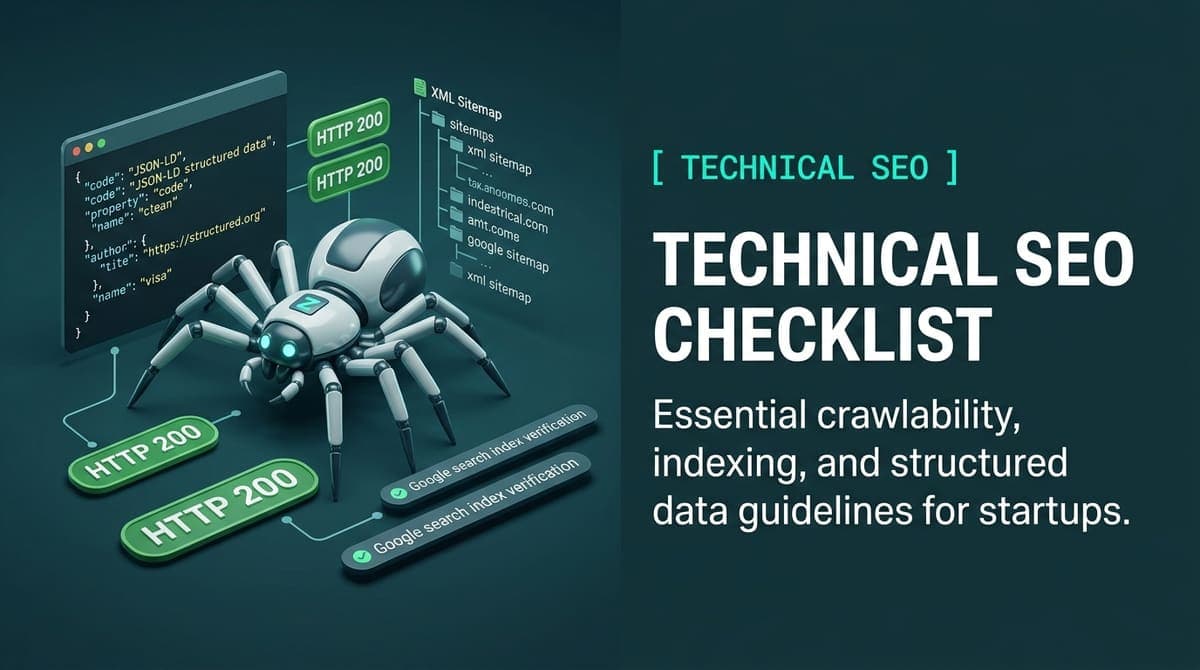
Several common technical setups quietly prevent AI crawlers from reading your content. JavaScript-rendered content is the most common culprit. If your site is a React or Next.js SPA that renders all text client-side, many AI crawlers won't see the actual content - they'll see a near-empty HTML shell. Server-side rendering or static generation is not just a performance choice; it is a GEO requirement.
- Pages blocked in robots.txt that should be indexable - AI crawlers respect Disallow rules
- JavaScript-only rendering with no SSR fallback
- Canonical tags pointing away from the content's primary URL
- Thin pages under 300 words with no clear question-answer structure
- Missing or broken structured data (validate at schema.org/validator)
- No HTTPS or mixed content warnings that signal an untrustworthy origin
How to Measure If You're Being Cited
Traditional Search Console won't show you AI Overview citations directly, but there are signals to track. Check your branded query impressions - if AI is citing you, users who see the citation will often follow up with a branded search. Tools like BrightEdge and Semrush now offer AI visibility tracking that shows when your domain appears in AI-generated answers for specific keywords.
Manual spot-checking still matters. Run your target queries in Google, Perplexity, and ChatGPT monthly and note whether your site is cited. Keep a log. This gives you a baseline so you can measure the impact of any changes you make. GEO optimisation is iterative - you publish, wait four to six weeks for recrawling, and measure.
Getting cited consistently by AI systems takes the right content architecture, schema implementation, llms.txt setup, and an ongoing external brand-building strategy. If you'd rather have a team that has already done this for multiple clients set it up for you - and keep it current as the standards evolve - that's exactly what Zovintra's SEO and content practice covers. Book a free discovery call at /contact and we can audit where your site stands today.