“Most startups have a content problem disguised as an SEO problem. Fix the technical layer first - then content has somewhere to land.”
The order most teams get backwardsWhy Technical SEO Comes Before Content
Publishing blog posts and landing pages before your technical foundation is solid is like filling a leaking bucket. Google may crawl your content, find crawl errors, slow page loads, or duplicate URLs, and either ignore your pages or rank them poorly regardless of how good the writing is. Technical SEO is not glamorous, but it is the foundation everything else builds on.
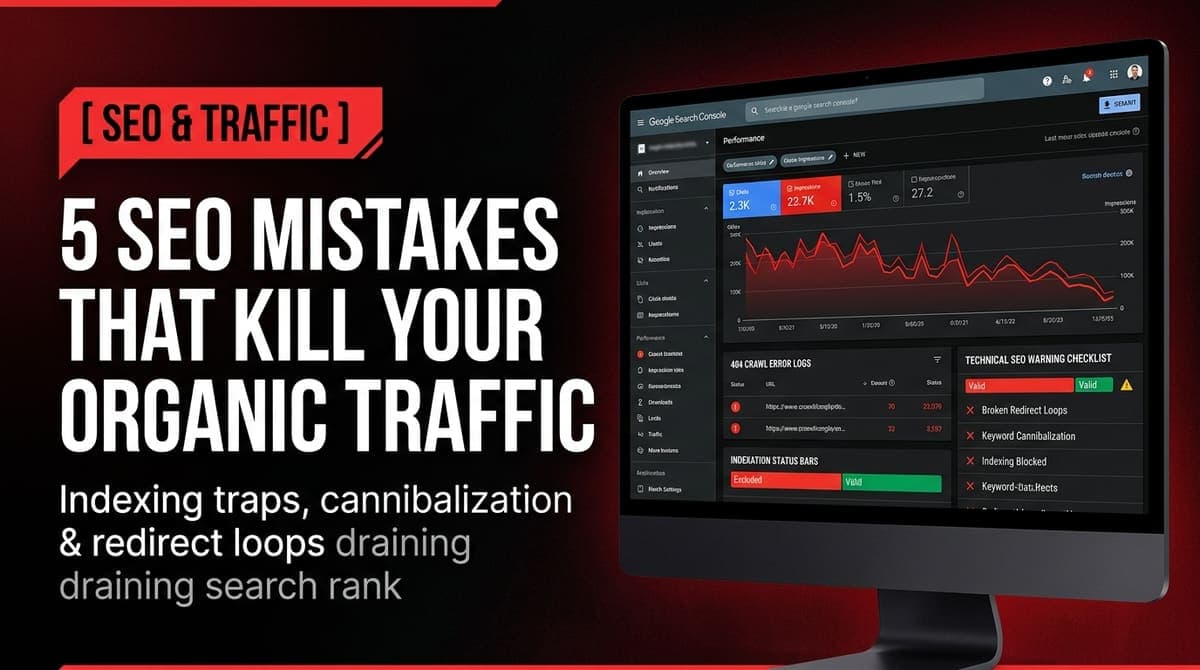
The good news for startups is that most technical SEO work is a one-time investment. Fix the site structure, configure your indexing correctly, and implement structured data once - and it works indefinitely. The bad news is that the mistakes are invisible. A page with a noindex tag or a broken canonical URL looks completely normal in a browser. You only see the damage in Search Console.
Indexing: Make Sure Google Can Find You
Before worrying about rankings, confirm your pages are actually indexed. Open Google Search Console, go to the URL Inspection tool, and check your key pages. A surprising number of startup sites have pages inadvertently blocked - either by a robots.txt rule left over from development, a noindex meta tag added to prevent staging content from leaking, or an x-robots-tag header set by a hosting platform.
Your robots.txt file should be minimal. Block only what genuinely should not be indexed - admin paths, internal search result pages, and API routes. Every time you add a disallow rule, confirm it isn't blocking a subdirectory that contains real content. Overly aggressive robots.txt files are one of the most common technical mistakes we find in site audits.
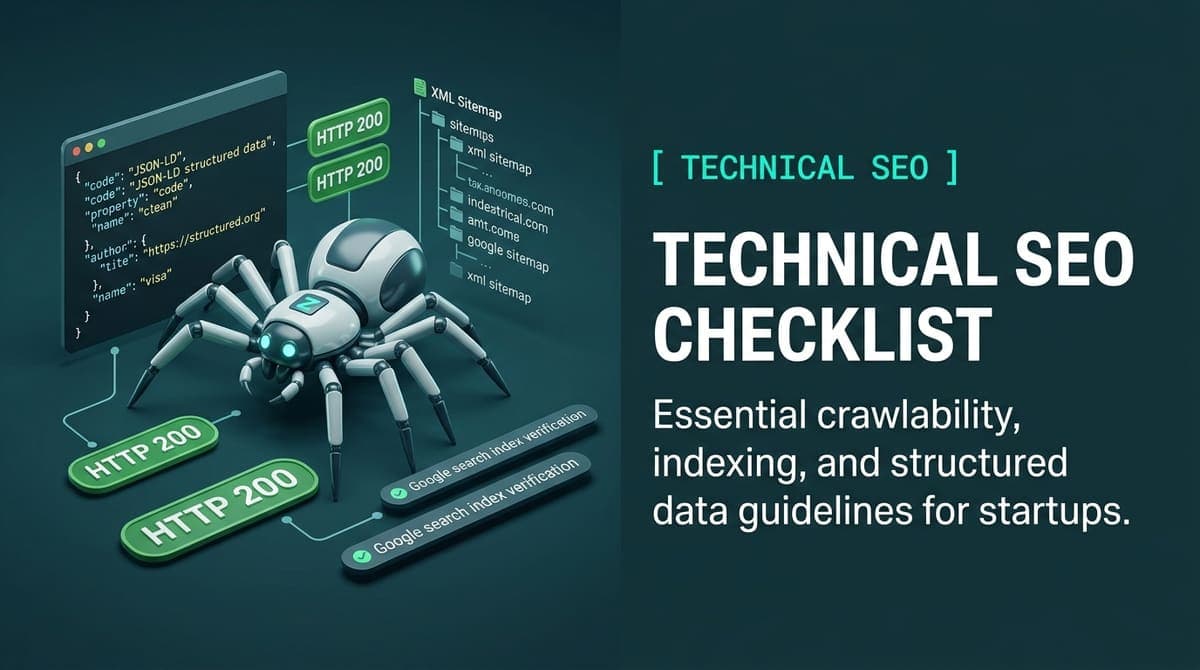
Submit an XML sitemap via Search Console. It should include only indexable, canonical URLs - no paginated internal search pages, no URLs with tracking parameters, no pages returning 404 or 301. Keep it updated automatically if your CMS or framework supports it. A sitemap with errors is worse than no sitemap because it creates confusion about what you actually want indexed.
Core Web Vitals: The Performance Layer That Affects Rankings
Core Web Vitals - Largest Contentful Paint (LCP), Interaction to Next Paint (INP), and Cumulative Layout Shift (CLS) - are Google ranking signals and user experience metrics simultaneously. A score in the "Needs Improvement" or "Poor" band is a direct drag on rankings for competitive queries.
LCP measures how fast your main content loads. The target is under 2.5 seconds. Common causes of slow LCP: a large hero image not served in modern formats (WebP/AVIF), render-blocking JavaScript, slow server response times (TTFB over 600ms), and missing preload hints for above-the-fold resources. For Next.js sites, the next/image component handles most of this automatically if used correctly.
CLS measures unexpected layout shifts - elements moving around as the page loads. The main culprits are images without defined width and height attributes, fonts causing FOUT (Flash of Unstyled Text), and dynamically injected banners or consent dialogs that push content down. These are fixable in a day if you know what to look for, but they are genuinely hard to detect without the right tooling.
Structured Data: Tell Google What Your Business Is
Structured data is JSON-LD markup that makes your content machine-readable to Google and other search engines. At minimum, every startup site should implement Organization schema (your company name, URL, logo, contact info, social profiles) and WebSite schema with a Sitelinks Searchbox if applicable. These are not ranking factors by themselves, but they feed entity recognition - Google building a knowledge graph understanding of who you are.
If you write blog posts, add Article or BlogPosting schema with author, datePublished, and dateModified fields. If you have a services page, add Service schema with descriptions. If you run events or webinars, Event schema can get you rich results in SERPs. The implementation takes an afternoon. The missing-implementation tax is paid silently across every query where a competitor with structured data gets a richer result than you.
Entity and Brand Recognition
Google increasingly organises the web around entities - businesses, people, topics - rather than just keywords. Getting your brand established as a known entity means your pages get associated with searches for your company name, your founders, and your topic cluster even before you rank for them.
Practical steps: create and fully complete your Google Business Profile, even if you are a fully remote company. Get a Wikipedia or Wikidata entry if you qualify. Ensure your name, address, and contact details are consistent across every directory, social profile, and citation. Claim profiles on Crunchbase, LinkedIn company page, and industry-specific directories. These create a web of signals that confirm your entity exists and is what you say it is.
The Audit You Should Do Before You Publish Anything
The most efficient time to address technical SEO is before your content marketing starts, not after you've published 30 posts and discovered half of them aren't indexed. A two-hour technical audit - robots.txt, Search Console setup, Core Web Vitals baseline, structured data implementation, and canonical URL configuration - will pay dividends for every piece of content you produce afterward.
If you're not sure where to start or you've been publishing for a while and not seeing traction, a structured SEO audit will tell you exactly what is blocking your visibility. This is one of the first things we do for clients who bring us in on SEO retainers - and the findings are rarely what the team expected.