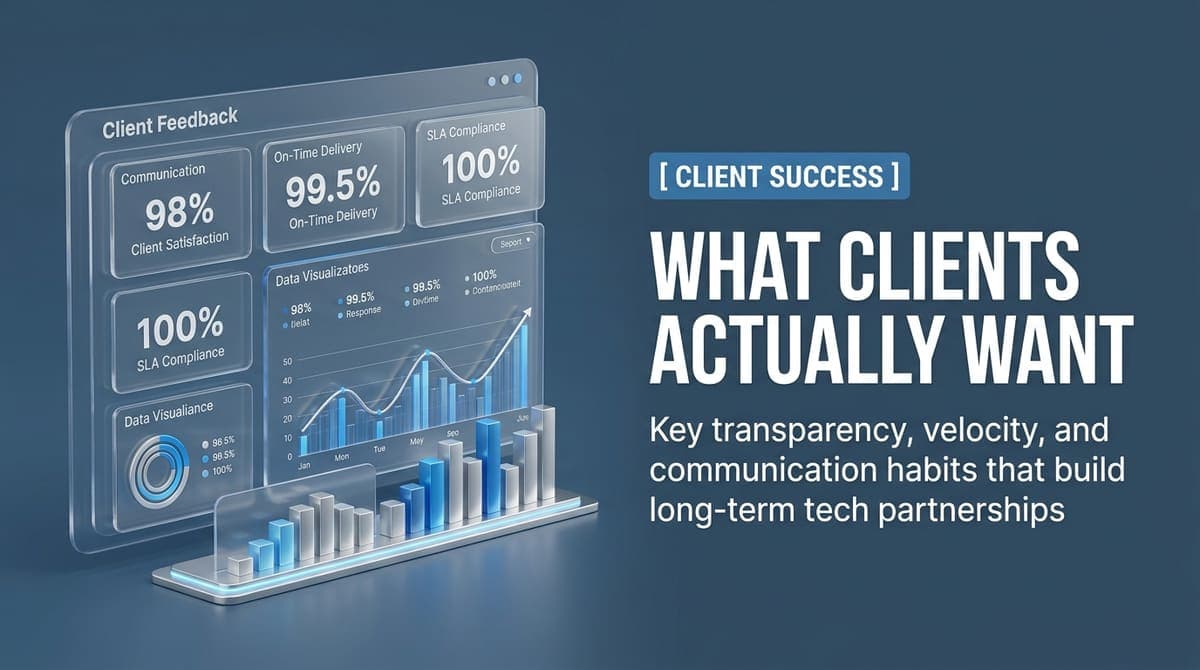
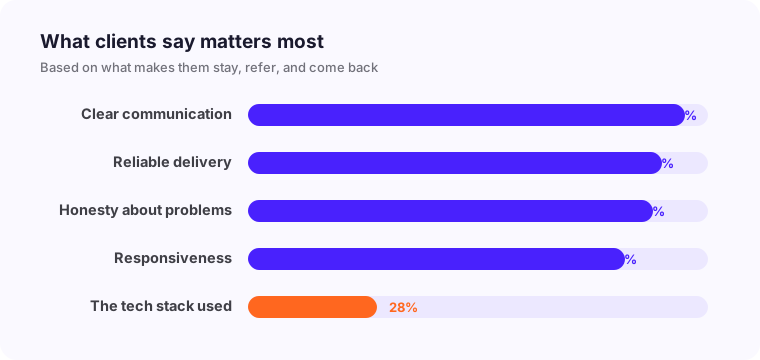
After working with 16+ clients across industries ranging from logistics to fintech to retail, the feedback patterns are remarkably consistent. What clients value most has very little to do with the tech stack. It's almost entirely about how you work.
Communication Is the Product
Clients want to know what's happening without having to ask. Weekly updates, clear timelines, and honest status reports matter more than technical brilliance. When something goes wrong - and it will - they want to hear about it early, not discover it at the deadline. The companies clients refer most are almost never the ones with the most impressive technical credentials. They're the ones who communicated well throughout.
Over-communication during a development project is almost impossible. Send an update when you start a sprint, a midpoint check-in on Wednesday, and a status note on Friday. If something changes between updates, communicate it immediately. Clients fill information vacuums with anxiety. An update that says 'everything is on track, nothing to report' takes 2 minutes to write and prevents hours of unnecessary worry.
Project Kickoff Best Practices
The quality of a kickoff call determines the quality of the entire project. A good kickoff covers: confirmation that everyone understands the scope (not assumes - confirms, with specific items read back), alignment on the definition of done for each milestone, agreement on how communication will work (weekly updates via email, Slack for quick questions, fortnightly video calls), and a shared understanding of the escalation path if problems arise.
Document everything that's said in the kickoff call and send a summary within 24 hours. Ask for written confirmation that the summary reflects the client's understanding. This isn't bureaucracy - it's insurance for both sides. The number of scope disputes we've seen that could have been prevented by a 5-minute email is significant.
- Send a kickoff agenda 48 hours before the call so clients can prepare
- Cover scope, timeline, milestones, communication cadence, and decision ownership in every kickoff
- Identify the primary decision maker on the client side - not the project contact, the person who can say yes
- Document and send a written summary within 24 hours, request written confirmation
- Agree on one channel for official communication and stick to it - multiple channels cause important things to get missed
Reporting Templates That Clients Actually Read
A weekly status update that clients read and appreciate has a consistent format. Status at a glance (on track / at risk / delayed), what was completed this week with specific outcomes (not just task names), what is planned for next week, and any decisions or approvals needed from the client side. That last section is the most important - it tells clients exactly what they need to do and removes ambiguity about their role.
Keep reports concise. A 400-word update with clear sections takes 3 minutes to read and 5 minutes to write. A 1,200-word update gets skimmed or skipped. The goal of the report is to give the client confidence that the project is under control, not to document every technical decision made during the week.
Handling Scope Creep Without Damaging the Relationship
Scope creep is the single most common source of client-company conflict. It rarely starts as a deliberate attempt to get more work without paying for it. It starts as a small additional request that seems reasonable in isolation. The team absorbs it. Then another small request. Then another. By week 8, the team is doing 30% more work than the proposal covered and nobody has had an explicit conversation about it.
The fix is a lightweight change request process that you introduce at the start of every project, not when the first scope change appears. Frame it positively: 'When new ideas come up during the project - and they always do - we use a simple process to evaluate them quickly and decide together how to handle them.' Clients don't resent the process when it's explained before they've submitted their first change request.
- Log every out-of-scope request immediately, even if you intend to absorb small ones
- Respond to change requests within 24 hours with a clear assessment: complexity, time, cost
- Never absorb scope silently - it sets a precedent and builds resentment on the delivery side
- Frame change requests as opportunities, not problems: 'This is a good idea, here's what it would take'
- Keep a change request log visible to the client so the total scope evolution is transparent
“Clients do not remember your framework. They remember whether you did what you said you would, when you said you would.”
What sets the best partners apartPricing Transparency and Post-Project Relationship
Clients who are surprised by invoices don't return. Pricing transparency means the proposal clearly states what's included, what's not included, and what would trigger additional charges. It also means proactively flagging when work is trending toward additional cost before the invoice arrives, not after.
The post-project relationship is where long-term client value is built. After delivery, check in at 30 days and again at 90 days. Not to sell something - just to ask how the product is performing and whether there's anything they need. Most of our repeat work has come from clients we stayed in contact with after delivery. Most of our referrals have come from those same clients.
Referral Generation From Happy Clients
Referrals don't happen automatically even from satisfied clients. You have to ask, and you have to ask at the right time. The right time is 4 to 6 weeks after a successful project delivery, when the client has had time to experience the results. A direct ask works better than a generic request: 'If you know another business owner dealing with [specific problem we solved for you], we'd love an introduction.'
Make it easy to refer you. A one-paragraph description of who you work with best, what problems you solve, and what a referral should expect from an intro call gives clients the language they need. Most clients want to refer good partners to their network - they just need to know what to say.
Technical skill is table stakes. Every company can build a website or an app. What separates a good company from a great one is how it feels to work with them. Clients should feel confident, informed, and respected throughout the entire project. That's what we aim for on every engagement.