“Taking over someone else's project is like moving into a house you've never seen. Everything looks fine until you open the walls.”
A senior engineer after their third rescue projectWhy Developer Handovers Are Harder Than They Look
When you take over a software project from another developer, the biggest risk isn't the code itself - it's everything that's undocumented. The decisions that seemed obvious at the time and never got written down. The workaround that's baked into three different files. The API key that's hardcoded in the config because "we'll fix that later."
Whether you're a developer picking up someone else's work, a founder onboarding a new agency, or a CTO inheriting a product from an outsourced team, a structured handover process is the difference between a smooth transition and months of firefighting.
This post covers how to evaluate an inherited project, what questions to ask before committing to a timeline, and how to take ownership without inheriting every problem the last developer left behind.
Start With a Codebase Audit Before Writing Any Code
The first rule of taking over a project from another developer is: do not touch the code until you understand it. Every change you make before you have a full picture creates a new variable. When something breaks - and something always breaks during a handover - you want to know whether it was already broken or whether you broke it.
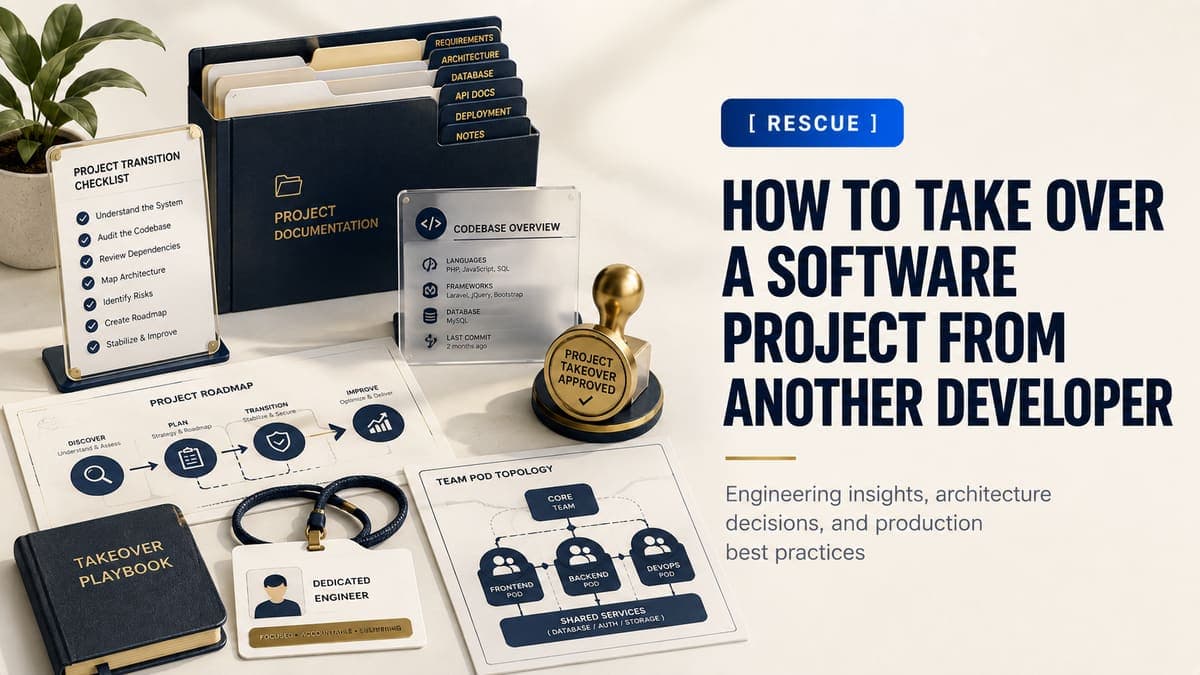
A codebase audit should take one to three days depending on the size of the project. You're looking for: overall architecture (is it sensible?), dependency health (are there outdated or vulnerable packages?), test coverage (is there any?), environment setup (does it actually run?), and deployment history (how does code get to production?).
- Run the app locally and note every error or missing step in the setup process
- Check the dependency list for packages more than two major versions out of date
- Search the codebase for hardcoded secrets, API keys, or database connection strings
- Look at the git history to understand what changed most recently and why
- Identify which parts of the app have no tests and which are most critical to the business
- Ask for access to logs from the live environment to see what errors are actually occurring
The Questions to Ask Before You Commit to Anything
Before you quote a timeline or scope for the work ahead, you need answers to a specific set of questions. Most of the risk in a project takeover comes from committing to a delivery date before you know how much technical debt you're actually inheriting.
The key questions: Is there a staging environment separate from production? Does anyone have documentation of the intended architecture? Are there any known bugs in production right now? Are there any external integrations (payment processors, email services, CRMs) that are partially implemented? What was the last thing that was changed before the previous developer left?
The answers to these questions change your estimate significantly. A project with a working staging environment and clear architecture documentation might take two weeks to stabilise. The same project without those things could take six. Getting this wrong at the quoting stage is the most common reason rescue projects run over budget.
Setting Up Your Own Development Environment
Once you've completed the audit, the next step is establishing a clean development workflow that belongs to you - not to the habits of whoever came before. This means setting up your own local environment from scratch using the documentation you've either found or written during the audit. If you can't get the app running from a clean setup, neither can anyone who joins the team after you.
Update the README to reflect reality. This sounds basic, but an accurate setup guide is one of the most valuable things you can leave behind. Every new developer who joins later will thank you. It also forces you to understand every dependency and environment variable well enough to explain it.
Handling Technical Debt Without Rewriting Everything
Every inherited project has technical debt. The question isn't whether to fix it - it's which debt to fix now and which to leave alone. Rewriting code that works creates risk for no immediate user benefit. Ignoring debt that is actively causing bugs or blocking new features makes every future change slower.
A useful framework: fix debt that is blocking progress, document debt that is stable and low-risk, and schedule debt that falls in between for a dedicated cleanup sprint. This approach keeps you moving on features while ensuring the most dangerous parts of the codebase don't stay dangerous indefinitely.
Setting Expectations With Stakeholders
The hardest conversation in a project takeover isn't technical - it's telling the client or your manager that the original timeline no longer applies. Every day you delay that conversation makes it worse. Have it early, with specific reasons tied to your audit findings, and present a revised timeline alongside the explanation.
Stakeholders who hired a developer and are now hearing that the work was incomplete or poorly done are usually frustrated, not irrational. What they need from you is a clear picture of where things stand and a credible plan to fix it. Vague reassurances will erode trust faster than honest bad news.
When the Handover Is Too Complex to Handle Alone
Some project takeovers are genuinely complex - distributed systems, multiple third-party integrations, live users with no downtime tolerance, or a codebase so large that auditing it properly takes weeks. In those situations, bringing in a team with rescue experience is often cheaper than having one developer figure it out solo.
Taking over a project from another developer is a skill in itself. It requires reading unfamiliar code quickly, making decisions about legacy systems without complete information, and communicating uncertainty to stakeholders while still moving forward. If you're facing a handover that feels over your head - or you're a founder trying to understand what you've inherited - getting a specialist review before committing to a plan is the lowest-risk move you can make.
Zovintra's rescue work starts exactly here: an honest audit, a realistic scope, and a team experienced enough to know what it doesn't know yet. If you've inherited a project that needs sorting out, a discovery call costs nothing and tells you exactly what you're dealing with.