“The worst part isn't the missing code - it's not knowing how much damage there is until you look inside.”
A founder who found out the hard wayWhat Actually Happens When a Developer Disappears
Your developer stopped replying. Calls go to voicemail. The last commit was three weeks ago and you don't know if the app even runs anymore. This situation is more common than most people admit - especially with solo freelancers, offshore contractors, or early hires who burn out and move on without warning.
Before you panic or immediately hire the next person you find, take a breath. The steps you take in the first 48 hours determine how fast you recover. Acting in the wrong order - like pushing a new developer into a codebase they've never seen - usually costs you more time, not less.
This post walks you through a practical recovery plan, from securing your assets today to getting your project back on track with a team that won't vanish.
Step One: Secure Everything You Can Access Right Now
Start with what you control. Log in to every service your developer had access to and change the credentials immediately. This includes your GitHub or GitLab repository, your cloud hosting (AWS, GCP, Vercel, Netlify), your domain registrar, your database provider, and any third-party APIs the app uses.
If your developer owned the accounts rather than being added as a team member, this is the situation you want to avoid - but you may still have options. GitHub support can transfer repositories if you can prove ownership of the associated business. Domain registrars have similar processes. It takes time, but it works.
- Change passwords and revoke API tokens on all connected services
- Download a full repository backup if you have access - even a zip of the source
- Screenshot or export any environment variable files you can see
- Check if billing is still tied to the developer's personal card - not yours
- Look for any deploy keys or OAuth apps the developer may have authorized
- Document what you know about the stack: language, framework, database, hosting provider
Step Two: Assess What You Actually Have
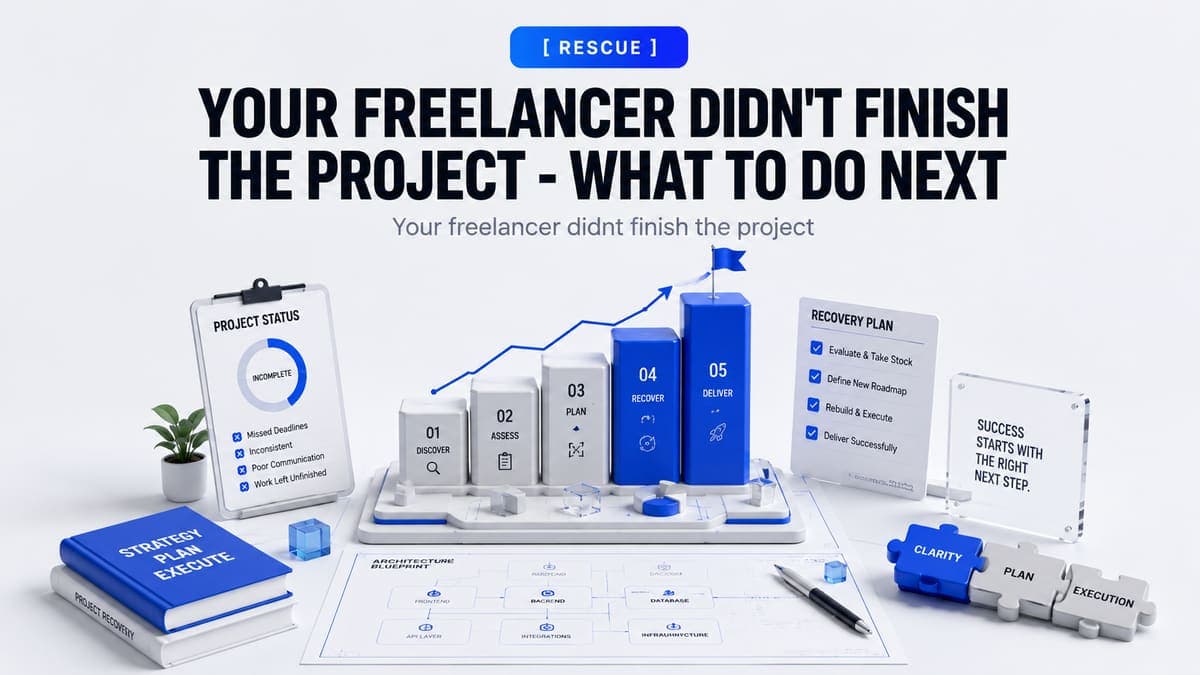
Once you've secured the accounts, take stock. A disappeared developer can leave anything from a nearly finished product to a half-built mess with missing dependencies. You need an honest audit before anyone writes a single new line of code.
The key questions are: Does the existing code run locally? Are there any tests, and do they pass? Is there a README or any documentation? Does the app deploy to the current hosting environment? The answers tell you whether you're inheriting a 60% done project or a 20% done project that looked 60% done in screenshots.
This is the phase where a technical review by a fresh set of eyes pays for itself. Hidden issues like hardcoded credentials, no environment separation, or a database with no backups are not visible in a demo but are catastrophic in production. A developer who looks under the hood before quoting a rescue saves you from inheriting someone else's debt.
What a New Developer Needs to Take Over Cleanly
You can't hand a new developer a repo URL and say "finish it." They need context: what was the original brief, what's done versus what's placeholder, where the known bugs are, and what the intended architecture was. The less context you can provide, the more a new team will charge to figure it out themselves.
If you have Slack or email threads with your old developer, export them. If you have any recorded calls, those are valuable. Even a rough list of "these features work" and "these features were never started" is enough to give a rescuing team a running start and keep costs predictable.
The Hidden Cost of Rushing the Handover
The temptation after a developer disappears is to hire someone the same week and get things moving again. That urgency is understandable, but rushing a handover without a proper audit is one of the most expensive mistakes you can make. A new developer who doesn't understand the old codebase will either work slowly (because they're figuring it out as they go) or work fast and break things (because they made assumptions that turned out to be wrong).
Budget two to four weeks for a proper stabilisation phase before expecting meaningful new features. That timeline includes reading the code, writing tests for the critical paths that had none, fixing the most dangerous issues, and establishing a clean development workflow so the same chaos doesn't happen again.
Audit First, Then Hire
- New team knows exactly what they're inheriting
- Scope and timeline are based on reality, not hope
- Technical debt addressed deliberately, not discovered by accident
- Fewer surprises means fewer overruns
How to Protect Yourself Going Forward
Once you're through the rescue, set up the working arrangement you should have had from the start. All code lives in a repository owned by your company account, not a personal one. Environment variables are stored in a secrets manager you control. Deployments happen through a CI/CD pipeline with documented steps, not a developer's laptop.
Regular access audits - quarterly is enough for most small teams - mean you never again find yourself locked out of your own product. The goal isn't distrust; it's building a system that survives any single person leaving.
When to Bring in a Specialist
Not every developer or agency is set up for rescue work. Most prefer greenfield projects where they set the architecture from the start. Rescue work requires a different mindset - patience with legacy decisions, the ability to read code written by someone else in a hurry, and experience untangling dependency messes without breaking what already works.
If the situation involves a client-facing product with real users, the stakes are higher still. Downtime, data loss, or a botched migration can damage your business while the rescue is underway. That's when specialist rescue experience - not just general development skill - matters.
This is the kind of work Zovintra handles through its Launch and Rescue service: auditing what you have, stabilising it, and delivering the rest with clear scope and no surprises. If your developer has disappeared and you're not sure where to start, a free discovery call is the fastest way to know what you're actually dealing with.