“The proposal tells you more about how the agency thinks than about what they will build. Read it that way.”
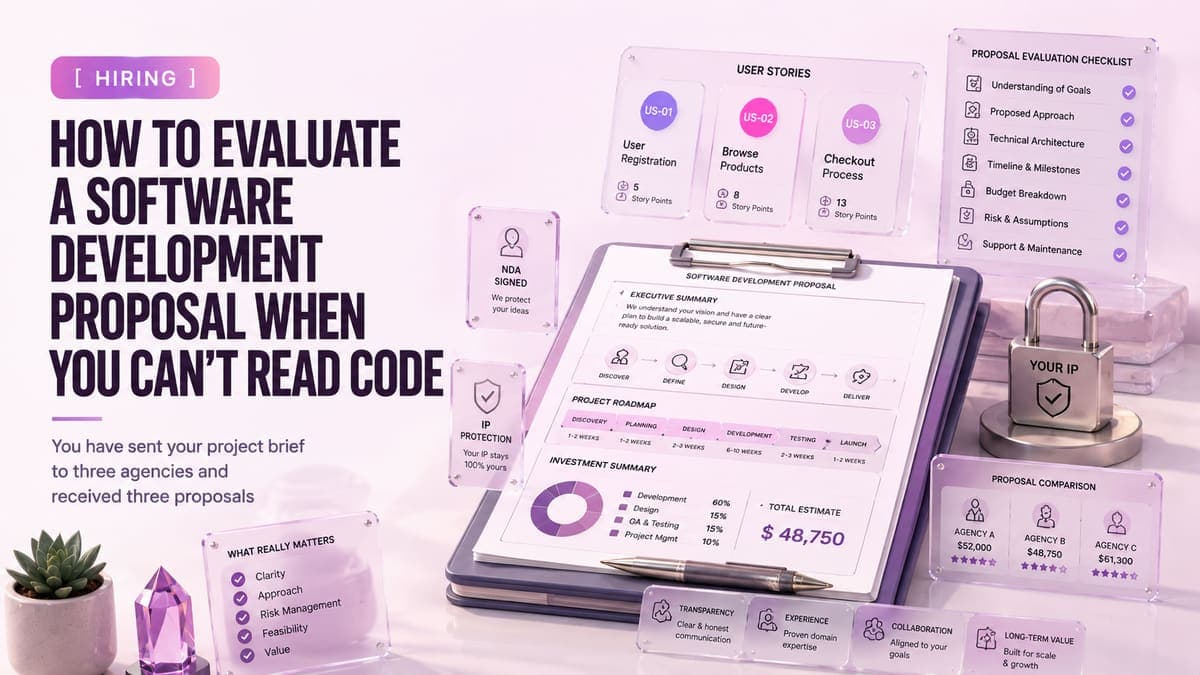
What a proposal really revealsYou have sent your project brief to three agencies and received three proposals. The prices are different. The timelines are different. The structures are different. And you have no idea how to compare them fairly because you cannot evaluate the technical approach.
This guide gives you a framework for evaluating software development proposals without needing to understand code. The signals that matter most are not technical — they are about clarity, specificity, and how the agency has understood your problem.
The Most Important Thing to Look For First
Before you look at the price or the timeline, read the first two pages of each proposal for one thing: does this agency understand what you are trying to build? The proposal should reflect your problem, your users, and your goals — not just a generic description of how they deliver software.
Agencies that send you a template with your company name inserted at the top have not engaged with your brief. Agencies that reflect the specific challenges you described, ask follow-up questions about your users, or point out something you had not considered — they have read your brief and thought about it. That difference predicts the quality of the working relationship more accurately than anything else in the proposal.
10 Things to Check in Any Software Proposal
- Does the scope match what you asked for? Or have they added features you did not request or removed things that were important?
- Are the deliverables specific? Each phase should describe what you will receive, not just what they will do.
- Is there a clear ownership and IP clause? You should own all code, designs, and credentials.
- Is payment tied to milestones or just to calendar dates? Milestone payments protect you.
- Is there a post-launch support or warranty period specified? 30 to 90 days is standard.
- Who specifically will work on the project? Named individuals or at least defined roles.
- How are scope changes handled? There should be a clear change request process.
- Does the timeline include time for QA and testing? If not, ask why.
- Is there a technology recommendation with a rationale? Or just a list of technologies they happen to use?
- Does the estimate include ongoing maintenance costs, or only the build?
Red Flags in Software Proposals
- A total price with no breakdown by phase or deliverable — you cannot verify what you are paying for
- No mention of who specifically will build the project
- Timelines that sound implausibly fast for the scope described — underestimated timelines lead to quality shortcuts
- No change management process — every project has changes, and not having a process means disputes
- Testimonials in the proposal that cannot be verified — names without companies, companies without contact details
- A technology stack recommendation with no rationale — they may be recommending what they have 'on the bench'
- Payment terms that front-load more than 30 to 40% of the total before significant work is complete
How to Compare Proposals at Different Price Points
When proposals vary significantly in price, the instinct is to ask why the expensive one costs more. The more useful question is: ask the cheaper one what they would not include that the expensive one does. The difference is almost always in scope, in team seniority, in QA thoroughness, or in the degree of documentation and handoff materials.
If a proposal comes in 40% below the others, it either means they have misunderstood the scope, they are planning to cut corners, or they are planning to charge for scope changes that the others have included. All three outcomes lead to a higher total cost than the cheaper initial quote suggested.
The Reference Check That Matters Most
After narrowing to two finalists, ask each for two reference contacts from projects of similar size and complexity. When you speak to those references, ask two questions: first, how closely did the final cost and timeline match the original proposal? Second, how did the team respond when something went wrong? The answers to those two questions will tell you more than everything else in the proposal combined.